

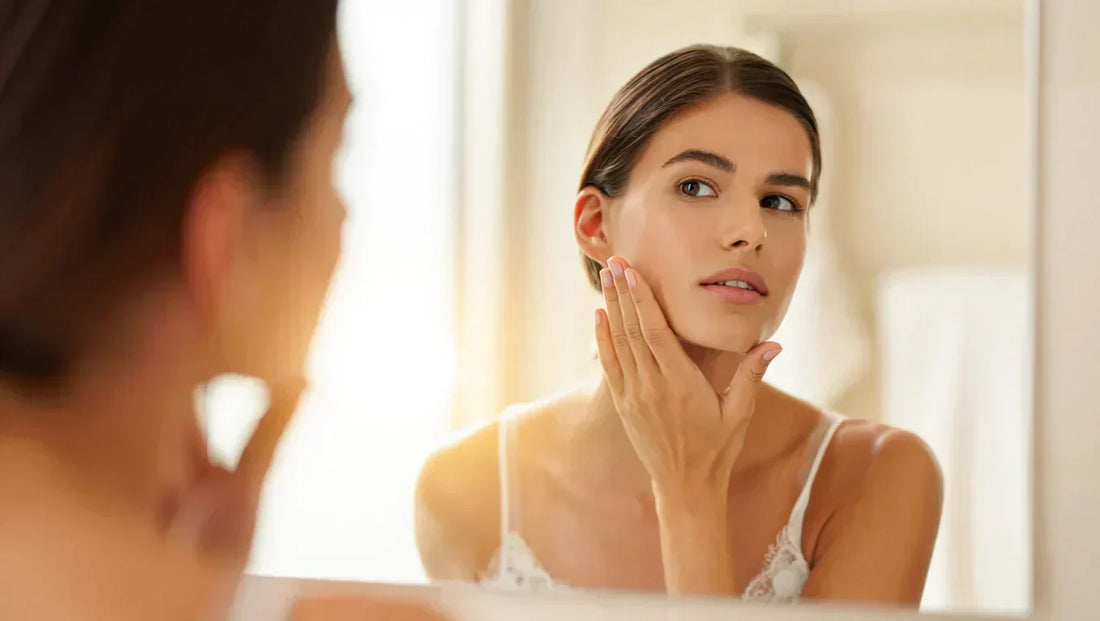
Intro
If you have ever noticed that your breakouts seem to migrate south as you get older, moving from your T-Zone to your chin and jawline, you are not alone. This specific pattern is the hallmark of hormonal acne.
Unlike the surface whiteheads of our teenage years, hormonal acne on the chin and jawline tends to be deep, cystic, and painful. It often arrives like clockwork, flaring up monthly and leaving stubborn marks behind.

The instinct is often to attack these spots with harsh acids and drying lotions. But because this acne is rooted in internal fluctuations, aggressive surface treatments often just damage the skin barrier without stopping the breakout. Here, we explore why this happens and how to treat hormonal acne naturally by working with your skin, not against it.
Why Is Chin Acne Hormonal?
Your skin is a map of what is happening inside your body. In Traditional Chinese Medicine and modern dermatology alike, the chin and jawline are linked to the reproductive system and hormonal fluctuations.
The Role of Androgens
The primary culprit is a group of hormones called androgens (which includes testosterone). When androgen levels spike—often before a menstrual cycle or due to stress—they signal your sebaceous glands to produce more oil. Unfortunately, the oil glands along the jawline and chin are particularly sensitive to these hormonal signals.
From Oil to Cyst
This excess oil is thicker and stickier than normal sebum. It gets trapped deep within the pore, mixing with dead skin cells. Because the blockage is deep, it doesn't always form a whitehead. Instead, it builds pressure underground, creating hormonal cystic acne on the jawline that feels like a tender bump under the skin.
How to Treat Hormonal Acne Naturally
Because this acne is deep and inflammatory, the goal is to calm the inflammation and gently draw out the impurity without ripping apart the surface skin.
1. Stop Picking (The "Triangle of Death")
Squeezing a deep cyst can cause the infection to spread internally or lead to severe scarring. Since there is no "head" to pop, picking only increases inflammation.

2. Use Clay as a Gentle "Extractor"
This is where Multani Mitti (Fuller's Earth) shines. Unlike harsh scrubs that irritate the surface, clay works through absorption. When applied as a spot treatment or full mask, it penetrates the pore to absorb the excess androgen-driven oil.
More importantly, it cools the area. Hormonal cysts are hot and inflamed. The natural cooling property of Fuller's Earth helps reduce the swelling and pain associated with hormonal acne on the neck and chin.
Learn more about how this works in our guide: Taming the Shine.
3. Support Your Barrier
Hormonal skin is often sensitive. Using a balanced mask like Oasis Sands, which combines Fuller's Earth with antibacterial Tea Tree and soothing Aloe, ensures you treat the bacteria without chemical burns.
Lifestyle Shifts for Hormonal Balance
Treating the skin is half the battle; the other half is internal balance.
Manage Your Cortisol
Stress produces cortisol, which triggers even more oil production. Incorporating a Mindful Masking ritual or a nightly wind-down routine can genuinely help lower the stress hormones that fuel your breakouts.
Spearmint Tea
Many holistic practitioners recommend organic spearmint tea for its potential to help regulate anti-androgen effects, calming the internal trigger for jawline breakouts.
The Takeaway
Hormonal acne is frustrating, but it is also a sign that your body is asking for balance, not warfare. By swapping harsh stripping agents for the gentle, deep-cleaning power of clay and supporting your body with calming rituals, you can soothe those painful flare-ups and help your skin find its rhythm again.
Soothe the inflammation.
Shop the balancing Oasis Sands Clay Mask.
Frequently Asked Questions
What hormone causes chin acne?
Chin acne is primarily driven by androgens, such as testosterone. These hormones overstimulate the oil glands along the jawline, producing thick sebum that clogs pores.
Does hormonal acne go away on its own?
It typically fluctuates with your cycle. While individual breakouts will heal, the cycle often repeats until the internal hormonal trigger or the external skincare routine is balanced.
Is clay good for cystic acne?
Yes. Clay masks like Fuller's Earth or Multani Mitti are excellent for cystic acne because they cool the inflammation and absorb the deep-seated oil without requiring invasive extraction or squeezing.