

You have tried everything. Salicylic acid, Benzoyl Peroxide, rich moisturizers—but those stubborn, tiny bumps on your forehead and jawline won't budge. In fact, they seem to get itchier the more you treat them.
You might not have "acne" at all. You might have Malassezia Folliculitis, commonly known as Fungal Acne.
Fungal acne requires a completely different approach than bacterial acne. While bacterial acne needs antibacterial treatments, fungal acne needs you to stop "feeding" the yeast living on your skin. This means many popular face masks loaded with oils and esters are actually making things worse.
Here is the science behind the condition and why a **fungal acne safe face mask** made of clay and botanicals is your best defense.
What is Fungal Acne? (The Yeast Beast)
Fungal acne isn't caused by bacteria. It is caused by an overgrowth of a yeast called Malassezia. This yeast naturally lives on everyone's skin, but in hot, humid, or oily conditions, it can multiply out of control.
How to spot it:
- It Itches: Unlike regular pimples, fungal acne bumps are often incredibly itchy.
- Uniformity: The bumps are usually small, uniform in size, and appear in clusters (often on the forehead or chest).
- Resistance: Traditional acne treatments often do nothing.
The Trigger: Why Oils are "Food"
Here is the crucial science: Malassezia yeast feeds on fatty acids.
When you apply products rich in oils (like Coconut, Olive, or Marula oil) or fatty esters (ingredients ending in -ate or -palmitate), you are essentially serving an all-you-can-eat buffet to the yeast. The yeast consumes the lipids and releases irritating byproducts that cause inflammation and those stubborn bumps.
Why Clay is the Ultimate Fungal Acne Treatment
If yeast feeds on oil, the solution is to remove the food source. This is why Fuller's Earth (Multani Mitti) is arguably the best ingredient for this skin type.
1. Starving the Yeast
Fuller's Earth absorbs excess sebum (your natural skin oil). Since Malassezia feeds on your sebum, reducing the oil levels on your skin surface literally starves the yeast population, forcing it back into balance.
2. No Fatty Acids
Pure clay is inorganic. It contains zero fatty acids. It is a completely "safe" ingredient that cannot trigger a fungal flare-up.
The "Buffered" Strategy: Hydration Without the Risk
The challenge with Fungal Acne is hydration. Your skin barrier is likely damaged, but you can't use most oils to fix it. You need a Water-Based Buffer.
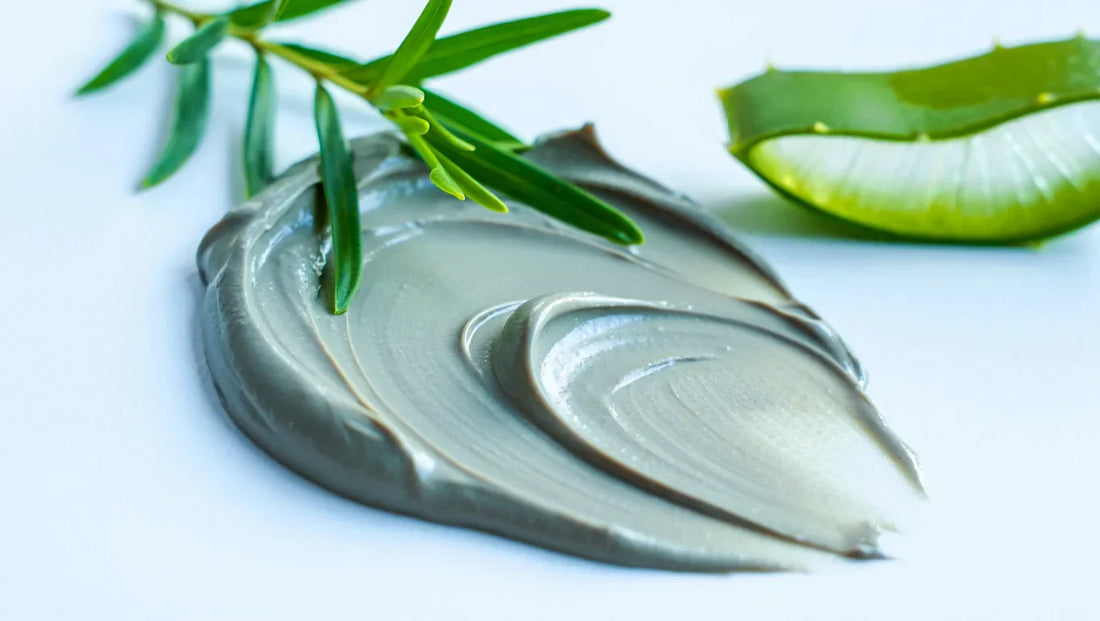
At Fulkhari, our Oasis Sands Mask is formulated specifically to be safe for congestion-prone skin.
Why Oasis Sands is Fungal Acne Safe:
- The Base: Fuller's Earth removes the sebum (yeast food).
- The Buffer: We use Aloe Vera. Aloe is mostly water and polysaccharides. It hydrates the skin and soothes the "itch" of fungal acne without providing food for the yeast.
- The Active: We infuse the clay with Tea Tree Oil. Studies have shown that Tea Tree is not only antibacterial but also antifungal. It actively fights the Malassezia yeast while the clay cleans the environment.
Note: While our Golden Sunset mask is amazing for dry skin, it contains Almond Oil. If you have active Fungal Acne, stick to Oasis Sands until the flare-up clears.
Your Fungal Acne Safe Routine
To clear the bumps, you need to strip your routine back to basics.
Step 1: Chemical Exfoliation (Optional)
Use a sulfur-based wash or a gentle salicylic acid cleanser.
Step 2: The Mask (2-3x Week)
Apply the Oasis Sands Mask for 10 minutes. The cooling sensation of the clay and Aloe will immediately help with the itching.
Step 3: Safe Hydration
Follow with a lightweight, oil-free gel moisturizer or pure Aloe Vera gel. Avoid heavy creams.
The Takeaway
Fungal acne is stubborn, but it isn't invincible. The key is to stop feeding it. By swapping oil-heavy products for oil-absorbing clay and antifungal botanicals like Tea Tree, you can reclaim your clear, smooth skin.
Stop the itch. Starve the yeast.
Shop the Oasis Sands Clay Mask.
Frequently Asked Questions
Is Multani Mitti safe for fungal acne?
Yes. Multani Mitti (Fuller's Earth) is inorganic and contains no fatty acids, so it cannot feed the yeast. It actually helps treat fungal acne by absorbing the sebum that the yeast feeds on.
Does Tea Tree oil kill fungal acne?
Yes. Tea Tree Oil is a proven antifungal agent. When used in a clay mask, it can help reduce the population of Malassezia yeast on the skin.
What ingredients trigger fungal acne?
Most plant oils (Coconut, Olive, Almond), fatty acids (Lauric, Stearic), and esters (Isopropyl Myristate) can trigger fungal acne. Stick to "FA Safe" ingredients like Aloe, Squalane, and MCT oil.