

Updated November 2026
Your skin microbiome is the community of bacteria, fungi and other microbes that live on your skin, and a balanced one helps keep skin calm and protected. Clay masks like Multani Mitti (Fuller's Earth) lift excess oil and surface buildup without the harshness of strong soaps, which is why they're often described as microbiome-friendly. The honest picture is that the clay-and-microbiome connection hasn't been studied much in people yet, so here's what is known and what isn't.
What Is the Skin Microbiome?
Your skin hosts different microbial communities depending on whether an area is oily (face, chest), moist (folds) or dry (forearms). These microbes compete with less welcome organisms for space and nutrients, some produce substances that hold others in check, and they help train the skin's immune responses (Byrd et al., 2018).

Why the acid mantle matters: healthy skin surface pH averages about 4.7, and researchers found skin below pH 5 was in better condition and better suited to its resident microbes than skin above 5 (Lambers et al., 2006).
When the balance shifts: scientists call an out-of-balance microbiome dysbiosis, and it has been linked with several common skin conditions. Whether the shift is a cause or a result is still being worked out.
What Can Upset the Balance
Harsh, high-pH cleansers: traditional bar soaps are alkaline and can leave skin tight, stripping oils that resident microbes rely on.
Over-washing and over-exfoliating: scrubbing, strong acids and too many actives at once all wear down the barrier the microbes live on.
Heavy use of antibacterial products: useful when you need them, but daily use on healthy skin isn't selective.
Environment: cold, dry air weakens the skin barrier, and sun exposure changes the skin surface too.
Where Clay Masks Fit
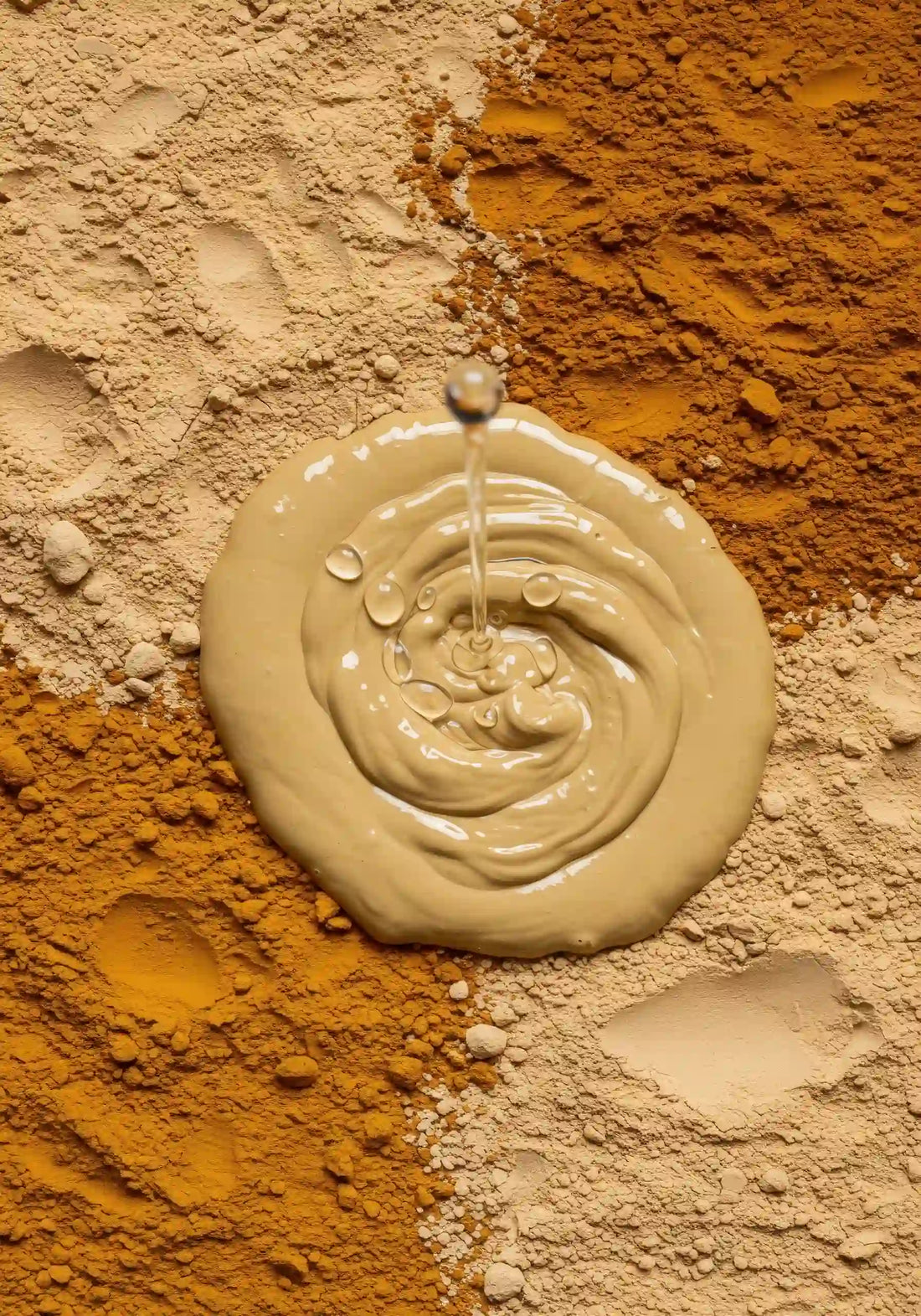
They clean by absorbing, not stripping: Multani Mitti (Fuller's Earth) is an absorbent clay that takes up oil and grime from the surface. Used for 10 to 15 minutes and rinsed while still slightly tacky, it removes excess oil without the squeaky, tight feeling of harsh soap.
What studies show so far: in a 2023 study, a kaolin and bentonite clay mask used twice a week for four weeks lowered skin oiliness and was well tolerated. It did not significantly change porphyrin levels, a common marker of activity by the skin bacterium C. acnes (Zhang et al., 2023). In other words, the clay changed the oil, not the bacteria, which fits the idea that clay masks are gentle on resident microbes. That study was funded by the mask's maker and didn't sequence the microbiome, so treat it as a clue rather than proof.
What isn't known: we found no published human study that sequenced the skin microbiome before and after Multani Mitti (Fuller's Earth) masks. Claims that clay "feeds good bacteria" or "detoxes" the microbiome go beyond the evidence.
Microbiome-Friendly Masking Habits
| Do | Why |
|---|---|
| Mask once or twice a week | Enough to manage oil without constantly disturbing the surface |
| Rinse before it cracks | Over-dried clay leaves skin tight and dry |
| Use lukewarm water and a gentle cleanser | Hot water and harsh soap strip the oils microbes rely on |
| Moisturize after | Supports the barrier the microbiome lives on |
| Don't stack actives on mask night | See our skin cycling guide |
For dry or sensitive skin, a buffered clay is gentler than raw powder mixed with water. For oily skin, see taming the shine, and for the clay itself, what is Multani Mitti (Fuller's Earth).
Frequently Asked Questions
What is the skin microbiome?
It's the community of bacteria, fungi and other microbes living on your skin. A balanced microbiome helps crowd out unwanted organisms and supports the skin's immune responses.
Is Fuller's Earth good for the skin microbiome?
It's likely gentle on it when used correctly. Multani Mitti (Fuller's Earth) absorbs excess oil rather than stripping skin like harsh soap, but no human study has yet measured its direct effect on the microbiome.
Do clay masks damage the skin barrier?
Not when used correctly. Leaving clay on until it cracks, or using it daily, can dry the skin. Rinse while still slightly tacky, use it once or twice a week, and moisturize afterwards.
How often should I use a clay mask?
Once or twice a week suits most skin types. Oily skin may tolerate a little more; dry or sensitive skin is usually happiest with once a week and a shorter wear time.
References
Byrd AL, Belkaid Y, Segre JA. The human skin microbiome. Nature Reviews Microbiology, 2018.
Lambers H, et al. Natural skin surface pH is on average below 5, which is beneficial for its resident flora. International Journal of Cosmetic Science, 2006.
Zhang X, et al. Comprehensive assessment of the efficacy and safety of a clay mask in oily and acne skin. Skin Research and Technology, 2023.