

Intro
If you’ve ever enjoyed a calming incense or a luxurious skincare product, you’ve likely come across the warm, creamy scent of sandalwood. For thousands of years, this precious wood has been a cornerstone of wellness rituals, especially in South Asia. But what exactly is sandalwood, and is it truly good for your skin?
The answer is yes. Sandalwood is highly valued in skincare for its scientifically-backed soothing and anti-inflammatory properties, making it excellent for calming irritated or sensitive skin. Here, we'll explore what sandalwood is, the key differences between the popular Indian and Australian varieties, and the specific benefits that make it such a cherished ingredient.
What is Sandalwood?
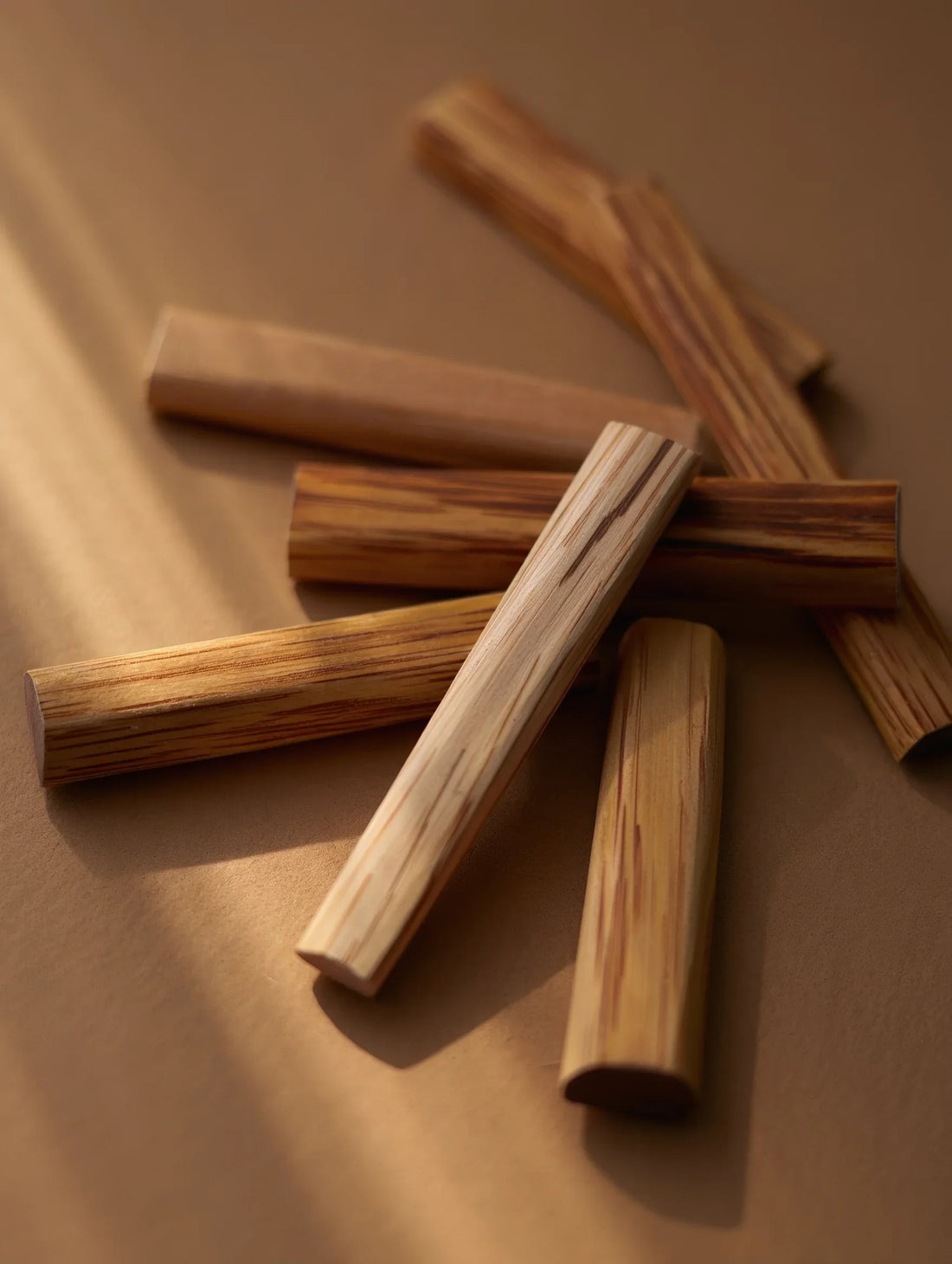
Sandalwood isn’t just one type of tree. The name refers to a class of fragrant woods that come from trees in the Santalum family. These slow-growing trees produce a dense, yellow, fine-grained heartwood that retains its fragrance for decades. It's from this heartwood that the prized oil, extracts, and powders are made.
What is the Difference Between Indian and Australian Sandalwood?
While there are several types of sandalwood, the two most common in skincare are Indian and Australian. They have different histories, scents, and chemical makeups.
 Indian Sandalwood (Santalum album)
Often called the "gold standard," this is the legendary sandalwood of history.
History & Tradition: Native to southern India, its use is deeply woven into Ayurvedic medicine and spiritual practices. For centuries, it has been made into a paste called chandan to cool the skin and soothe irritations.
Scent Profile: Its famous scent is what makes it so prized. It is exceptionally rich, sweet, creamy, and woody, with a soft, long-lasting quality.
Key Compounds: The scent and benefits come from high levels of natural compounds called alpha-santalol and beta-santalol.
Australian Sandalwood (Santalum spicatum)
This respected alternative rose to global popularity as a sustainable option.
History & Tradition: It has its own rich history of use by Indigenous Australians, who valued it for its medicinal properties.
Scent Profile: Its scent is also beautifully woody, but it's often described as being sharper, greener, and more earthy than the Indian type. It doesn't have the same deep, creamy sweetness.
Key Compounds: It also contains beneficial santalols, but the concentration and ratio are different, which explains the different aroma.
Why is Sandalwood So Expensive?
True Indian Sandalwood has a high price tag for several reasons. First, the tree must grow for at least 15-30 years before its heartwood develops the prized oil. Second, historical over-harvesting made the wild trees endangered, so today it only comes from sustainably managed plantations that require significant time and investment. This careful management and rarity contribute to its cost.
What Are the Main Benefits of Sandalwood for Skin?
The natural compounds in sandalwood, particularly the santalols found in the Indian variety, provide several key benefits backed by science:
It Calms Redness and Irritation: The primary benefit of sandalwood is its powerful anti-inflammatory property. This means it can actively work to soothe the skin's stress responses, helping to visibly reduce redness and calm general irritation. This makes it a fantastic ingredient for sensitive or reactive skin.
It Helps Purify the Skin: Sandalwood also has mild antiseptic qualities. This means it helps cleanse the skin and can be beneficial for managing blemishes, contributing to a clearer, more balanced complexion.
How is Sandalwood Used in Skincare Products?
You'll find sandalwood in a few different forms in your products:
Essential Oil: The most potent form, which must always be diluted for skin safety.
Powder: Finely ground wood, traditionally used to make a paste.
Extracts: The beneficial compounds are pulled from the wood using a liquid, allowing them to be easily mixed into formulas like in soaps, cleansers, and treatments such as the restorative our Rose Meadows Clay mask.
Be aware of "sandalwood fragrance" or "parfum," which are often synthetic and lack the skin-soothing benefits of real sandalwood.
The Takeaway
So, is sandalwood good for your skin? Yes, it's a wonderful, traditionally-revered ingredient with scientifically-backed soothing benefits. Its ability to calm and purify makes it a valuable addition to routines for all skin types, especially those prone to sensitivity. By understanding the differences between varieties and how it's used, you can better appreciate the intention behind the products you choose and enjoy the grounding, serene experience this sacred wood offers.