

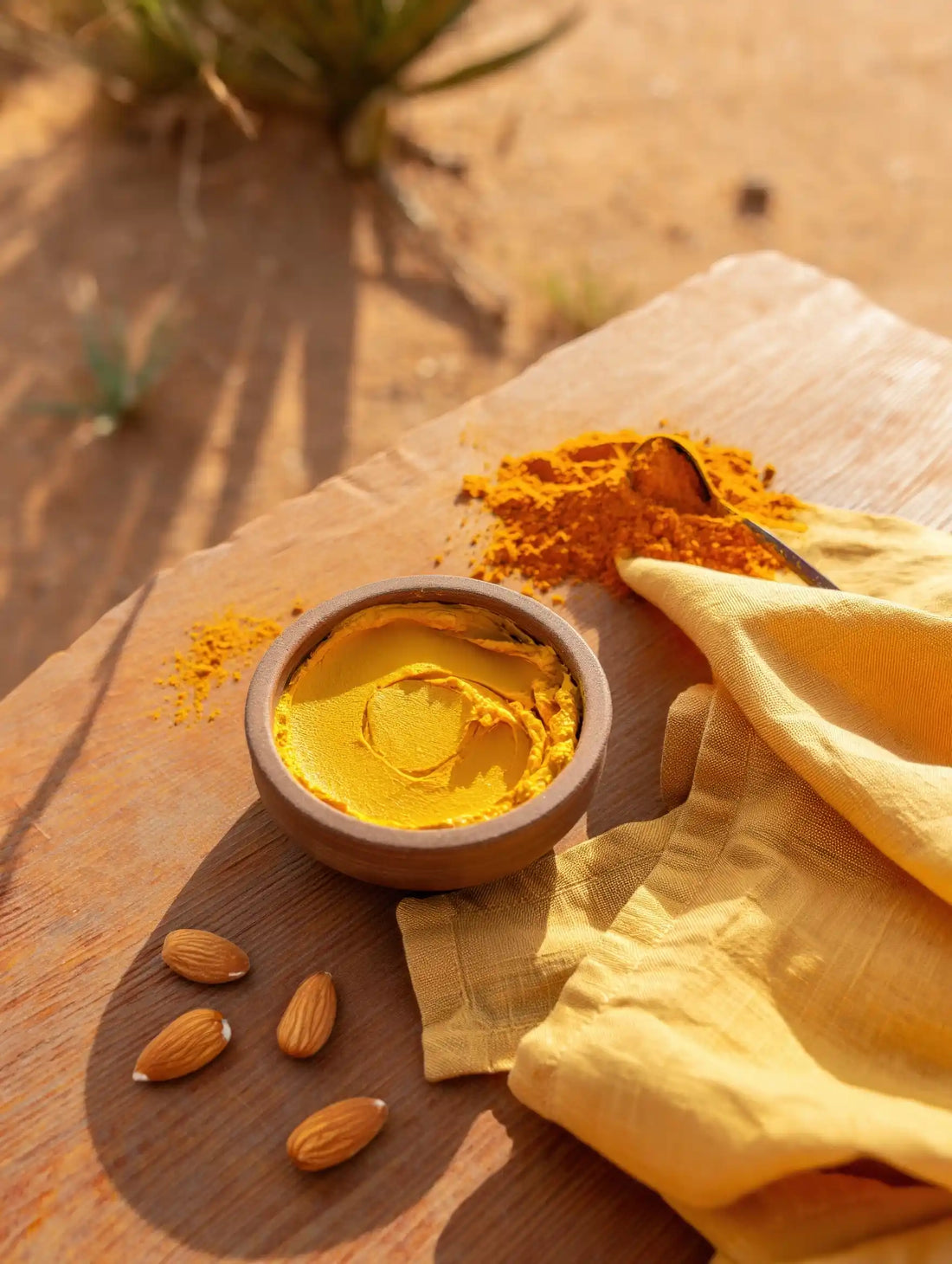
Intro
Long before we had shelves full of bottled cleansers and fancy serums, kitchens across South Asia held the secrets to glowing, healthy skin. One of the most cherished and lasting of these traditional homemade mixes is Ubtan (oob-tun). Ubtan is a multi-purpose paste made from simple, natural ingredients. For centuries, people have used it not just for cleaning the skin, but also as a special ritual for purifying, beautifying, and taking a mindful moment for self-care.

Ubtan is often linked with pre-wedding ceremonies, like the Haldi (turmeric) ritual, where it's lovingly applied to the bride or groom to give them a special glow. But its use goes far beyond these celebrations. Ubtan represents a complete approach to skincare that comes from Ayurvedic principles (an ancient Indian system of wellness). It uses natural ingredients that are easy to find, blended together in ways that make them work even better. Let's explore the tradition of Ubtan, understand its usual ingredients, learn about the science behind why they work, and see how its spirit continues in modern wellness today.
The Core Ingredients: Nature's Power Mix
While Ubtan recipes can change a bit from region to region or even family to family, the classic version usually includes a few key ingredients. Each one is chosen for its special benefits:
Chickpea Flour (Besan): This often forms the main base of the Ubtan paste. Chickpea flour is known for its gentle but effective cleansing and exfoliating abilities.
The Science: Chickpea flour is rich in natural cleansing agents and also contains zinc, which is good for controlling oil and helping skin heal. It soaks up extra oil and dirt without stripping away the skin's natural moisture. Its slightly grainy texture provides a mild scrubbing action, lifting away dead skin cells to show a smoother surface. It also has antioxidants that help protect the skin.
Turmeric (Haldi): The golden heart of many Ubtan recipes. A small amount is usually added for its powerful benefits.
The Science: The main active part of turmeric, curcumin, has strong anti-inflammatory effects, which means it calms redness. It also provides antioxidant protection, fighting off damage from the environment. Plus, it has brightening properties, helping to even out skin tone by reducing extra melanin (skin pigment). Even a little pinch adds a lot to the mask's power.
Yogurt (Dahi) or Milk: These dairy ingredients are often used as the liquid to mix the powders into a paste. They do more than just add moisture.
The Science: Both yogurt and milk contain lactic acid. This is a gentle type of Alpha Hydroxy Acid (AHA) that helps dissolve dead skin cells and improve skin texture and hydration. Yogurt also contains probiotics (good bacteria), which may help support the skin's natural community of helpful microbes, promoting overall skin health and balance.
Common Additions and Changes
People often added other ingredients to Ubtan, depending on their skin type, what effect they wanted, or their family traditions:
Sandalwood Powder (Chandan): Added for its cooling and soothing qualities. It's especially good for irritated or sensitive skin and has a distinct calming scent.
Rose Water (Gulab Jal): Often used with or instead of dairy. It's a hydrating and toning liquid that is known for being gentle and helping with inflammation.
Honey (Shahad): Included because it draws moisture to the skin (it's a humectant). It also has natural antibacterial benefits.
Almond Powder (Badam): Finely ground almonds added extra nourishment from Vitamin E and fatty acids, and provided a richer scrubbing effect.
Neem Powder: Added for its strong purifying and antibacterial qualities, especially helpful for acne-prone skin.
The Ubtan Ritual: More Than Just a Mask
Just looking at its ingredients doesn't give you the full picture of Ubtan. Preparing and applying Ubtan was traditionally a mindful ritual. Carefully measuring and mixing the ingredients was an act done with intention. The paste was usually massaged gently onto the skin (face and often the whole body). It was allowed to partially dry before being gently rubbed or rinsed off. This massage action helped blood circulation along with the exfoliation. The earthy smell of chickpea flour, the warmth of turmeric, the coolness of yogurt or rose water, it was an experience for many senses. It turned a simple cleansing into a relaxing and renewing moment. In events like weddings, applying Ubtan becomes a group ritual. It symbolizes purification, blessings, and joyful preparation for a new beginning.
Why Ubtan Lasts: Timeless Benefits
The combination of these natural powerhouses helps with many skin needs at the same time: effective cleansing, gentle exfoliation, brightening, balancing, and soothing. This ability to do many things gently is why Ubtan has been used for so long. It gives visible results using natural, easy-to-find ingredients, showing a complete approach to care.
The Spirit of Ubtan in Modern Skincare
While modern life might not always give us time for the daily ritual of mixing fresh Ubtan, its ideas are very much alive in today's wellness and natural skincare movements. Brands inspired by traditional wisdom often try to capture the spirit and effectiveness of Ubtan.
This might mean including key Ubtan ingredients like turmeric or chickpea extract in modern products. Or it might mean creating ready-to-use masks that offer similar benefits in a convenient form. For example, while not a direct copy of Ubtan, a product like Fulkhari's Golden Sunset Mask takes inspiration from this tradition. It combines brightening turmeric with purifying Fuller's Earth (Multani Mitti) and hydrating honey, aiming for a similarly complete, glow-boosting effect without the DIY process.
The legacy of Ubtan reminds us that effective skincare doesn't always need complex chemicals. Sometimes, the most powerful solutions are found in the simple, combined wisdom of nature, passed down through generations and waiting to be rediscovered as part of our modern wellness journey.